
The era of the “starving artist” is rapidly becoming a myth of the past. As we move deeper into the mid-2020s, a profound shift is occurring in the global workforce. While Artificial Intelligence and automation reshape traditional corporate roles, there is a simultaneous, exploding demand for the authentic, the tangible, and the human-made. We are witnessing the rise of the Maker Economy.
For those seeking a career change or a lucrative side hustle, “crafting jobs” no longer refers merely to selling knitted scarves at a holiday bazaar. Today, it encompasses a sophisticated ecosystem ranging from high-tech laser fabrication and digital asset creation to professional artisan employment and the psychological practice of “job crafting” within corporate structures.
Whether you intend to launch a Shopify store, seek employment as a professional prop maker, or redefine your current role to find more meaning, this guide provides the strategic roadmap to navigating the intersection of creativity and commerce.
The New Maker Economy: High-Demand Craft Side Hustles
The barrier to entry for manufacturing has never been lower. However, the competition is fierce. The difference between a hobbyist and a successful creative entrepreneur lies in selecting the right niche—specifically, those with high profit margins and scalability.
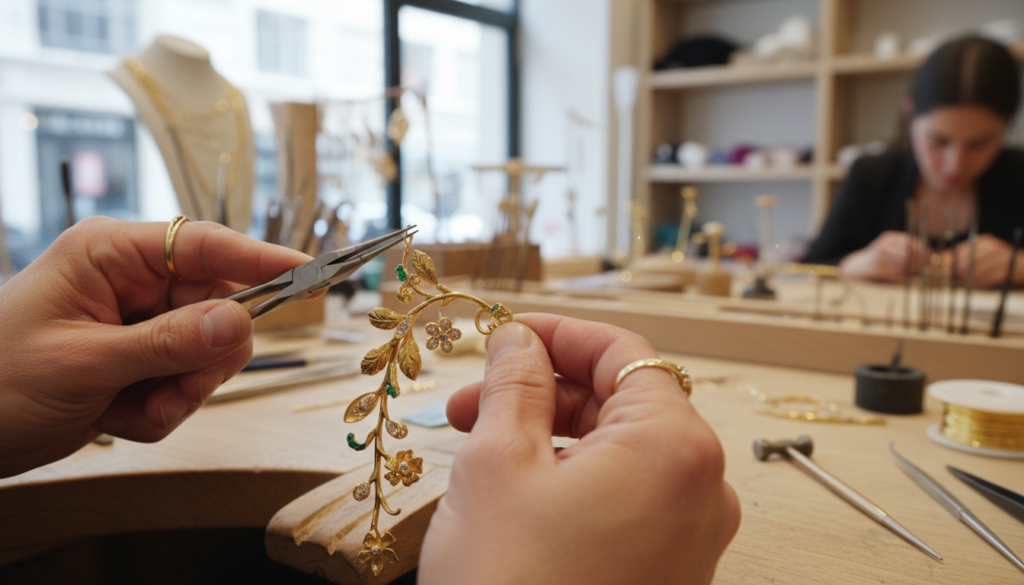
High-Tech Crafting: Laser and 3D Fabrication
The most lucrative sector of the modern craft economy involves “subtractive” and “additive” manufacturing. Tools like the Glowforge (laser cutter/engraver) and advanced 3D printers have democratized industrial design.
- The Opportunity: Personalized, high-ticket items. Instead of selling a generic wooden cutting board for $20, laser crafters engage in mass customization—selling engraved, personalized wedding gifts or corporate branding materials for $80+.
- Strategic Insight: Focus on materials with high perceived value, such as leather, slate, and acrylic. The “job” here is half design (using vector software like Adobe Illustrator) and half machine operation.
The Eco-Craft Boom: Upcycling and Sustainability
Sustainability is no longer a buzzword; it is a consumer mandate. There is a massive market for “furniture flipping” and textile upcycling. This goes beyond painting an old dresser; it involves professional restoration and modernizing vintage aesthetics.
- The Market: Gen Z and Millennial buyers on platforms like Depop and Facebook Marketplace are actively seeking unique, sustainable home decor that keeps waste out of landfills.
- The Skillset: This requires knowledge of sanding, staining, upholstery, and color theory. The profit margins here are exceptional because your Cost of Goods Sold (COGS) is often near zero if you source from curbsides or estate sales.
Digital Crafting: The Zero-Inventory Model
For those who want a crafting job without physical shipping or overhead, digital crafting is the gold standard. This involves creating digital files that other crafters use.
- Product Examples: SVG cut files for Cricut users, STL files for 3D printer enthusiasts, or digital planner templates for tablets.
- The Economics: You create the asset once and sell it infinitely. This is true passive income. Your “work” shifts from manufacturing to Search Engine Optimization (SEO) and trend analysis on platforms like Etsy and Creative Fabrica.
Niche Profitability: B2B Crafting
Most side hustlers sell Business-to-Consumer (B2C). The real money, however, is often in Business-to-Business (B2B).
- The Strategy: Instead of selling one custom mug to a person, pitch 50 branded mugs to a local real estate agency as closing gifts.
- Implementation: Approach local coffee shops, realtors, and event planners. Position yourself as a local manufacturing partner who offers faster turnaround and higher quality than overseas print shops.
Beyond the Side Hustle: Full-Time Professional Crafting Careers
Not everyone wants to run a business. Many creative individuals prefer the stability of a paycheck but crave the satisfaction of working with their hands. There are distinct career paths where “craft” is the primary job description.

Visual Merchandiser
Visual merchandisers are the architects of retail desire. They craft the physical environment of stores to maximize sales and brand aesthetic.
- The Role: This involves carpentry, painting, prop styling, and spatial design. You are essentially crafting a “vibe.”
- Employers: Major retailers like Anthropologie, IKEA, and luxury fashion houses hire full-time visual teams.
- Career Trajectory: Entry-level roles often start in execution (installing displays), moving up to regional creative direction (designing the concepts).
Prop Maker and Set Designer
The entertainment industry consumes a massive amount of craft labor. From theater productions to film sets and escape rooms, “fabricators” are in high demand.
- The Role: You might be asked to craft a realistic-looking sword out of foam, age a “vintage” letter, or build a breakaway chair.
- Skills: Versatility is key. You need working knowledge of sculpting, casting, mold-making, and painting.
- Getting Hired: This industry relies heavily on portfolio development. Document every project you build, even personal ones, to demonstrate your technical range.
Production Artisan
In a world of mass production, there is a counter-movement of boutique manufacturing. High-end brands selling leather goods, hand-thrown ceramics, or custom furniture employ teams of skilled artisans.
- The Role: Unlike an assembly line, a production artisan often owns the entire creation process of an item, ensuring the highest quality standards.
- The Benefit: You get to master a craft (e.g., saddle stitching leather) on someone else’s dime, without the stress of marketing or finding customers.
The Modern Trades
We must reframe “blue-collar” trades as “crafting careers.” High-end carpentry, welding, and masonry are artistic pursuits.
- The Pivot: A welder can transition from industrial pipe fitting to creating architectural ironwork for luxury homes. A carpenter can specialize in custom cabinetry or timber framing. These roles offer high salaries and the deep satisfaction of tangible work.
The Third Path: Psychological Job Crafting
Perhaps you are not ready to leave your corporate job, or you need the benefits it provides. You can still apply the principles of crafting to your current role. This concept, known in organizational psychology as Job Crafting, involves redesigning your job to better align with your strengths and values.
What is Job Crafting?
Originating from researchers Wrzesniewski and Dutton, this theory suggests that employees can “craft” their job descriptions to find meaning, rather than waiting for management to do it for them.
Three Pillars of Job Crafting
- Task Crafting: Altering the number, type, or nature of tasks.
- Example: An accountant who loves graphic design might volunteer to create the visual charts for the annual report, thereby introducing creativity into a data-heavy role.
- Relational Crafting: Changing who you interact with.
- Example: A software engineer who feels isolated might start a mentorship program for junior developers to introduce a social, teaching element to their day.
- Cognitive Crafting: Changing how you perceive your work.
- Example: A hospital janitor re-framing their job from “cleaning floors” to “protecting patients from infection and aiding recovery.”
How to Pitch This to Your Boss
Do not frame this as “I want to do what I want.” Frame it as optimization.
- Script: “I’ve noticed I deliver the highest value when I’m working on [Creative Task]. I’d like to adjust my workflow to focus 20% more on that area, which will improve our team’s output in [Specific Metric].”
Advanced Strategy: Scaling from Maker to Manufacturer
For those choosing the entrepreneurial route, the “trap” is trading time for money. There is a ceiling to how many items you can make by hand. To break through, you must apply advanced scaling strategies.
The Product Ladder
Don’t just sell one thing. Build a ladder:
- Lead Magnet: A low-cost digital download or small item (e.g., sticker) to acquire a customer.
- Core Offer: Your main handmade product (e.g., a hand-knit sweater).
- High-Ticket Upsell: A custom workshop teaching others how to knit, or a “kit” that allows them to do it themselves.
Outsourcing and Drop-Shipping
If your designs are your strength, stop manufacturing.
- Print on Demand (POD): Use services like Printful or Gelato to put your designs on merchandise. They handle printing and shipping; you handle the art and marketing.
- Apprenticeships: If you must make handmade goods, hire apprentices. You train them in your style, allowing you to focus on business development and design while they handle production.
The Business of Craft: Essential Tools & Financial Literacy
Passion does not pay the rent; profit does. To succeed, you must treat your craft as a data-driven business.
The Tech Stack
- Marketing: TikTok Shop and Pinterest are the highest-converting platforms for visual crafts. Use Instagram Reels for “behind the scenes” process videos, which build high trust.
- Design: Canva for branding, Adobe Creative Cloud for professional asset creation.
- AI Tools: Use ChatGPT or Jasper to write SEO-optimized product descriptions and Midjourney to brainstorm design concepts (but never to replace the final product).
Pricing for Profit (The Formula)
Most crafters underprice. Use this formula:
$$ (Materials + Labor + Overhead) \times 2 = Wholesale Price $$
$$ Wholesale Price \times 2 = Retail Price $$
Labor must be calculated at a fair hourly wage, not what you “think” it’s worth. If the market won’t bear the price resulting from this formula, your process is too slow or your materials are too expensive.
Common Mistakes and Pitfalls to Avoid
1. Ignoring Copyright Law
“Fan Art” is a legal minefield. Selling items with Disney characters, sports logos, or celebrity likenesses can get your shop banned and lead to lawsuits. Stick to original designs or public domain works.
2. Monetizing Every Hobby
Not everything you love needs to be a job. Monetization introduces deadlines, customer complaints, and taxes. Ensure you keep one creative outlet just for yourself to prevent burnout.
3. Failing to Diversify
Do not build your entire livelihood on one platform (e.g., Etsy). If their algorithm changes, your income disappears. Build an email list and your own website (Shopify/Squarespace) to own your audience.
Your Implementation Checklist
Ready to start? Follow this linear path:
- Discovery Phase: Identify your intersection of Skill, Passion, and Market Demand. (e.g., “I love woodworking, and I see a demand for standing desks.”)
- Validation Phase: Create a prototype. Do not buy bulk materials yet. List the prototype on Marketplace or Etsy. Does it get clicks?
- Business Basics: Register a DBA (Doing Business As), set up a separate business bank account, and secure your social media handles.
- Content Creation: Film the process of making your item. Post 3-5 times a week on TikTok/Reels to build anticipation.
- Launch: Open your shop with 5-10 listings.
- Optimization: Review analytics after 30 days. Which keywords brought traffic? Doubles down on what works and cut what doesn’t.
Frequently Asked Questions (FAQ)
Q: Is the market for handmade goods saturated?
A: Generic markets are saturated. Niche markets are not. You will struggle to sell “beaded bracelets,” but you can dominate the market for “sensory-friendly fidget jewelry for adults with ADHD.” Specificity is the key to saturation.
Q: Can I make a living solely off Etsy?
A: It is possible, but risky. Think of Etsy as a customer acquisition tool, not your employer. Use Etsy to find customers, then use packaging inserts to drive them to your own Shopify site for repeat purchases.
Q: Do I need a degree to be a Visual Merchandiser or Prop Maker?
A: Rarely. While a degree in Fine Arts or Industrial Design helps, a strong portfolio is the ultimate currency. Employers want to see what you can make, not where you studied.
Q: How does “Job Crafting” differ from “Quiet Quitting”?
A: Quiet Quitting is disengagement—doing the bare minimum. Job Crafting is re-engagement—proactively changing the job to make it more stimulating and valuable for both you and the company.
Conclusion
The divide between “blue-collar work,” “corporate jobs,” and “creative arts” is blurring. Whether you are firing up a laser cutter in your garage to generate side income, or pitching a job crafting proposal to your HR department, the power lies in taking agency over your production.
The most successful professionals of the next decade will be those who can blend technical skill with creative vision. The tools are available, the market is waiting, and the barrier to entry has crumbled. The only remaining step is to pick up your tools and begin.