

Imagine sitting in a sun-drenched corner of your favorite local coffee shop—or perhaps curled up on your couch with a warm blanket. You have your laptop open, a cup of tea steaming beside you, and you are getting paid to read. For many, this sounds like a fantasy. However, in the booming digital economy, this is the daily reality for professional proofreaders.
If you are the type of person who spots a typo on a restaurant menu from a mile away, or if grammatical errors in text messages make you cringe, you already possess the raw talent required for this career.
Proofreading is one of the most accessible, flexible, and scalable entry-level jobs in the freelance market. It is the ultimate “work from home” (WFH) side hustle that can evolve into a full-time freelance business. But let’s be clear: it is not just about reading. It is a technical skill that requires training, a sharp eye, and a mastery of rules.
This comprehensive guide will walk you through exactly how to become a proofreader, from understanding the industry nuance to landing your first paying client.
Proofreading vs. Copyediting: Know the Difference to Earn Your Worth
Before you launch your business, you must understand where you fit in the editorial ecosystem. A common rookie mistake is conflating proofreading with copyediting. Confusing these two will lead to scope creep (doing more work than you are paid for) and frustrated clients.
The Copyeditor: The Renovator
Copyediting happens before proofreading. It involves the heavy lifting. A copyeditor looks at sentence structure, flow, tone, and clarity. They might rewrite entire paragraphs to ensure the author’s voice is consistent. Think of copyediting as home renovation: moving walls, painting rooms, and fixing the plumbing.
The Proofreader: The Home Inspector
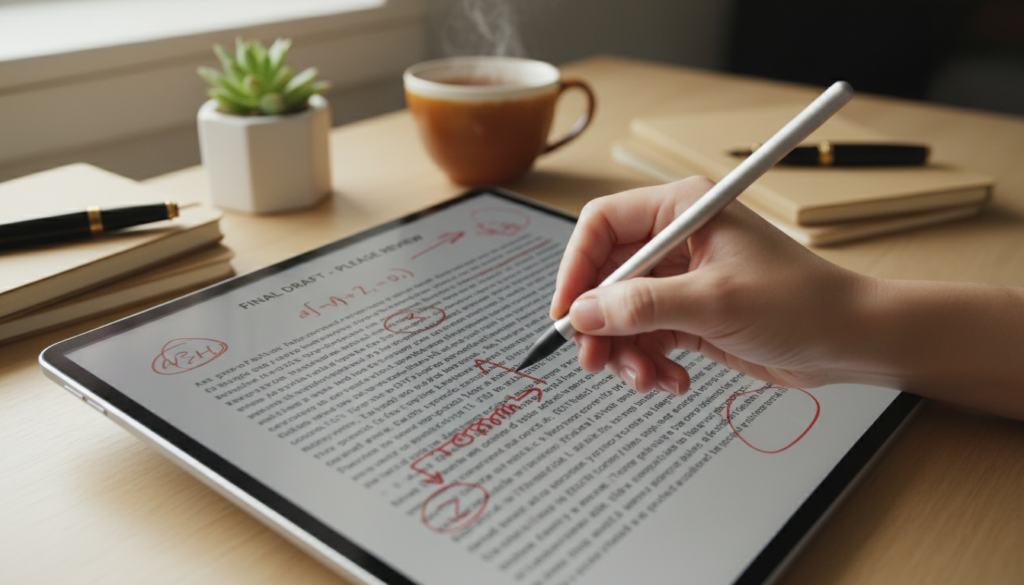
Proofreading is the final stage of the editorial process before publication. The content is already written, edited, and formatted. Your job is the “quality control” check. You are looking for:
- Mechanical Errors: Spelling, capitalization, punctuation, and grammar issues.
- Formatting Glitches: Inconsistent headers, double spaces after periods, or incorrect page numbering.
- Typographical Errors: Missing words or repeated words (e.g., “the the”).
Pinterest Pro Tip: Visualize the difference this way: The writer builds the house. The editor designs the interior. The proofreader walks through with a checklist to ensure every light switch works and there are no scratches on the floor before the new owners move in.
Essential Skills and The Digital Toolkit
You do not need an English degree to succeed, but you do need a specific set of skills and tools. The modern proofreader relies on technology to enhance their natural attention to detail.
1. Mastering the Style Guides
In the professional world, “correct” is often subjective based on the style guide the client uses. You must be familiar with the industry standards.
- The Chicago Manual of Style (CMOS): This is the “bible” for book publishing, fiction, and non-fiction. If you want to proofread novels or Kindle books, you must know CMOS.
- The AP Stylebook: Used primarily by journalists, news outlets, and many corporate blogs.
- APA Style: The standard for academic papers and social sciences.
2. The Eagle Eye
You need the ability to focus intensely for long periods. Professional reading is slower than leisure reading. You must train your brain to read what is actually on the page, not what your brain thinks should be there.
3. Technical Proficiency
- Microsoft Word (Track Changes): This is the industry standard. You must know how to use the “Track Changes” feature to show your edits without permanently altering the text until accepted.
- Google Docs: Many bloggers and startups prefer the collaboration features of Google Docs. You should be comfortable using “Suggesting” mode (the equivalent of Track Changes).
- PDF Markup Tools: For proofreading print-ready layouts (like menus or brochures), you will need to know how to use annotation tools in Adobe Acrobat or iAnnotate.
4. AI Tools: Assistant, Not Replacement
Tools like Grammarly and ProWritingAid are essential for efficiency, but they are fallible. They often misunderstand context or style nuances. Use them as a first pass to catch low-hanging fruit, but never rely on them as the final authority. You are the human intelligence that clients pay for.
The Education Roadmap: Do You Need a Degree?
The short answer is no. Clients rarely ask to see a university diploma. They care about two things: Can you do the job? And are you easy to work with?
However, “no degree” does not mean “no education.” To command professional rates, you need training.
High-Value Certification Courses
Investing in a course can fast-track your career by months or years.
- Proofread Anywhere: Highly popular among the Pinterest community, this course focuses on general proofreading and business building.
- The Editorial Freelancers Association (EFA): Offers respected courses on specific skills like medical proofreading or recipe editing.
- Coursera / Udemy: Good for budget-friendly refreshers on grammar basics.
Self-Study Library
If you are bootstrapping your freelance business, start by acquiring these books:
- The Best Punctuation Book, Period by June Casagrande.
- Eats, Shoots & Leaves by Lynne Truss.
- McGraw-Hill’s Proofreading Handbook.
Choosing Your Niche: Where the Money Is
Generalists compete on price; specialists compete on value. To maximize your income, consider specializing in a specific niche.
1. Transcript Proofreading
This is a hidden gem in the industry. Court reporters produce massive amounts of transcripts daily and need eagle-eyed proofreaders to check them for errors before they go to legal record. This niche requires learning specific notation but often pays higher rates due to the technical nature and quick turnaround times.
2. General & Blog Proofreading
With content marketing exploding, businesses churn out blog posts, newsletters, and social media captions daily. This is a high-volume niche perfect for beginners. The content is usually conversational and easier to digest.
3. Academic Proofreading
If you love structure and citations, helping PhD students and researchers polish their dissertations can be lucrative. You must be an expert in style guides like APA, MLA, or Harvard referencing.
4. Self-Publishing (Indie Authors)
The self-publishing revolution has created a massive market of authors who need affordable, professional proofreading for their romance, thriller, or fantasy novels.
How to Build a Portfolio from Scratch
The classic “Catch-22”: You need experience to get clients, but you need clients to get experience. Here is how to break the cycle.
The “Before and After” Strategy
You do not need a paid client to create a portfolio piece.
- Find a text with errors (a poorly written blog post or a public domain text).
- Copy it into a Google Doc or Word Doc.
- Perform your proofreading magic using Track Changes.
- Take screenshots of the “messy” version (showing your work) and the “clean” version.
- Organize these into a PDF or a simple folder to show potential clients.
Volunteer Strategic Work
Offer to proofread a newsletter for a local non-profit or a friend’s startup website in exchange for a testimonial and permission to use the work in your portfolio. Three strong testimonials can launch a career.
Your Professional Presence
You need a simple “home base” on the internet. This doesn’t need to be complex. A one-page website or a clean LinkedIn profile works wonders. Clearly state:
- What you do (e.g., “Romance Novel Proofreader”).
- Your rates or packages.
- Your contact method.
Finding Your First Clients
Now that you are skilled and ready, how do you find work?
1. The Marketplace Route
Platforms like Upwork, Fiverr, and Freelancer are competitive, but they are excellent for cutting your teeth.
- Strategy: Don’t just apply. Customize every proposal. Point out a typo in their job description (politely) to prove your value immediately.
2. Cold Pitching
This is where the real money is. Identify 50 bloggers, digital marketing agencies, or small publishers. Send them a polite, professional email.
- Script: “I’ve been following your content and love your recent post on [Topic]. I’m a professional proofreader and noticed you produce a high volume of content. I’d love to help take the pressure of ‘final checks’ off your plate.”
3. Social Media Networking
Join Facebook groups for writers (e.g., “Self-Publishing Authors,” “Blogging for Beginners”). Don’t spam your services. Instead, be helpful. When someone asks a grammar question, answer it correctly and kindly. Build authority, and clients will come to you.

Advanced Strategy: Setting Rates and Scaling
Pricing Your Services
Do not sell yourself short.
- Per Hour: Good for new projects where the scope is undefined. Beginners often start around $15–$25/hour, while pros charge $35–$50+.
- Per Word: Standard for book publishing. Rates might range from $0.003 to $0.01 per word depending on complexity.
- Reference: Always consult the Editorial Freelancers Association (EFA) rate chart to ensure you are charging industry standards.
The “Retainer” Goal
The Holy Grail of freelancing is recurring revenue. Once you land a client (like a blogger), propose a monthly retainer. For example: “For $300/month, I will proofread up to 4 blog posts and 2 newsletters.” This gives you stability and the client peace of mind.
Common Mistakes to Avoid
Even talented proofreaders fail if they ignore the business side or get lazy with their skills.
- Ignoring the Context: Changing a character’s dialogue to be “grammatically correct” when they are supposed to be speaking slang or dialect. You must respect the author’s voice.
- ** relying on Spellcheck:** Spellcheck will not catch “trail” vs. “trial” or “manger” vs. “manager.” Only human eyes can catch context-based homophones.
- Ghosting Clients: Communication is as important as grammar. If you are going to miss a deadline, communicate it early.
- Underpricing: Charging $5 to proofread a 10,000-word document destroys the market and burns you out.
Implementation Checklist: Your 7-Day Action Plan
Ready to start your new career? Follow this roadmap.
- Day 1: Research and decide on your niche (General, Legal, Academic).
- Day 2: Purchase or bookmark your essential style guides (CMOS, AP).
- Day 3: Refresh your grammar skills (take a free quiz or watch YouTube tutorials on comma splices).
- Day 4: Create 3 “Before and After” portfolio samples.
- Day 5: optimize your LinkedIn profile and set up a simple portfolio document.
- Day 6: Create profiles on Upwork and Fiverr.
- Day 7: Send your first 5 cold pitches or proposals.
Comprehensive FAQ
Q: Is proofreading the same as editing?
A: No. Editing involves changes to structure, flow, and content. Proofreading is the final check for mechanical errors (spelling, grammar, punctuation) and formatting issues before publication.
Q: How much can I earn as a beginner proofreader?
A: Beginners can typically earn between $15 and $25 per hour. As you specialize (e.g., in legal or medical transcripts) and gain speed, rates can rise to $40–$60+ per hour.
Q: Do I need to buy expensive software?
A: No. Most proofreading can be done with Microsoft Word (using Track Changes), which is industry standard. While paid versions of Grammarly or ProWritingAid are helpful, they are not mandatory to start.
Q: Is proofreading in demand in 2025 and beyond?
A: Yes. As AI generates more content, the need for a “human in the loop” to verify accuracy, tone, and nuance is actually increasing. Businesses cannot afford the reputational damage of AI hallucinations or errors.
Q: Can I do this on an iPad or Tablet?
A: While possible for reading, it is difficult to do professional formatting and deep editing on a tablet. A laptop or desktop computer is highly recommended for efficiency and reducing eye strain.
Conclusion
Becoming a proofreader is more than just a side hustle; it is a pathway to professional freedom. It allows you to monetize a skill you likely already use every day. By understanding the distinction between editing and proofreading, mastering your tools, and confidently pitching your value, you can build a career that fits your life—whether that’s traveling the world or staying home with your family.
You have the eye for detail. You have the roadmap. The only typo left to fix is the one in your job title. It’s time to change it to “Professional Proofreader.”