
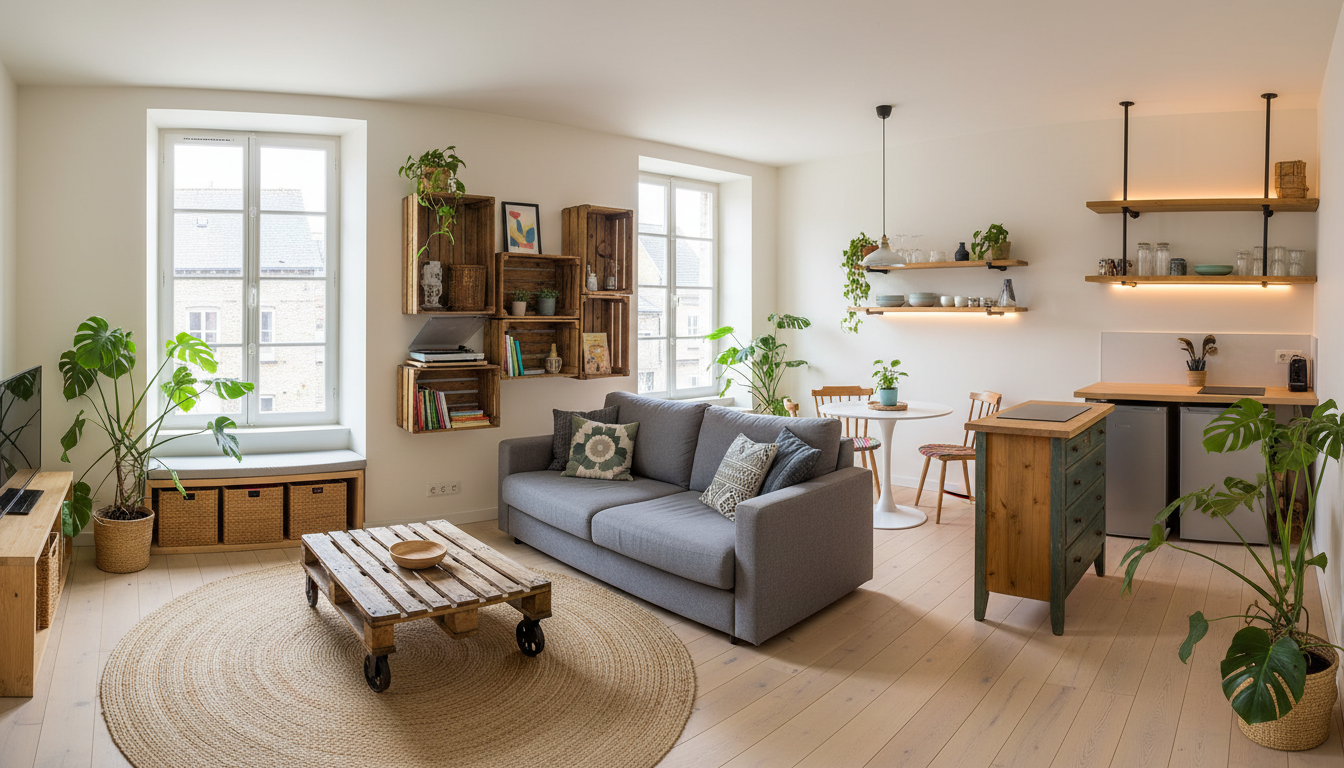
Moving into a new apartment is an exhilarating milestone, but it often brings a financial shockwave. Between security deposits, first month’s rent, and utility setups, your bank account is likely already strained. The prospect of filling empty rooms can induce panic, leading many to swipe credit cards at big-box retailers for “fast furniture” that looks good in a catalog but falls apart within a year.
For the true frugal living enthusiast, however, an empty apartment is not a crisis—it is a blank canvas for strategic resourcefulness. Furnishing a home on the cheap does not mean living in squalor or settling for rickety milk crates. It requires a shift in mindset from “consumer” to “curator.”
This guide is not about cutting corners; it is about maximizing value. It is about rejecting disposable culture in favor of sustainability, patience, and the thrill of the hunt. By leveraging community networks, mastering the secondhand market, and applying a little sweat equity, you can build a home that is distinctive, comfortable, and debt-free.
Here is the definitive roadmap to furnishing your apartment with high-quality pieces for pennies on the dollar.
The Frugal Mindset: Value Over Price
Before spending a single dollar, you must adopt the appropriate psychological framework. The amateur mistake is confusing “low price” with “good value.” A $30 particle-board bookshelf that bows under the weight of books and peels after six months has a terrible cost-per-use ratio. A solid oak bookshelf found at a thrift store for $40, which will last a lifetime, is the true frugal choice.
The 48-Hour Rule
When you first get the keys, the urge to fill the space immediately is overwhelming. Resist it. Live in your empty apartment for at least 48 hours—ideally a week—before buying furniture. This cooling-off period allows you to understand the flow of the apartment, the lighting, and what you essentially need versus what you think you need.
The “Cash-Only” Constraint
Set a strict budget for your initial furnishing phase. Using cash (or a debit card) forces you to be creative. When credit is not an option, you stop looking at retail showrooms and start looking at potential.
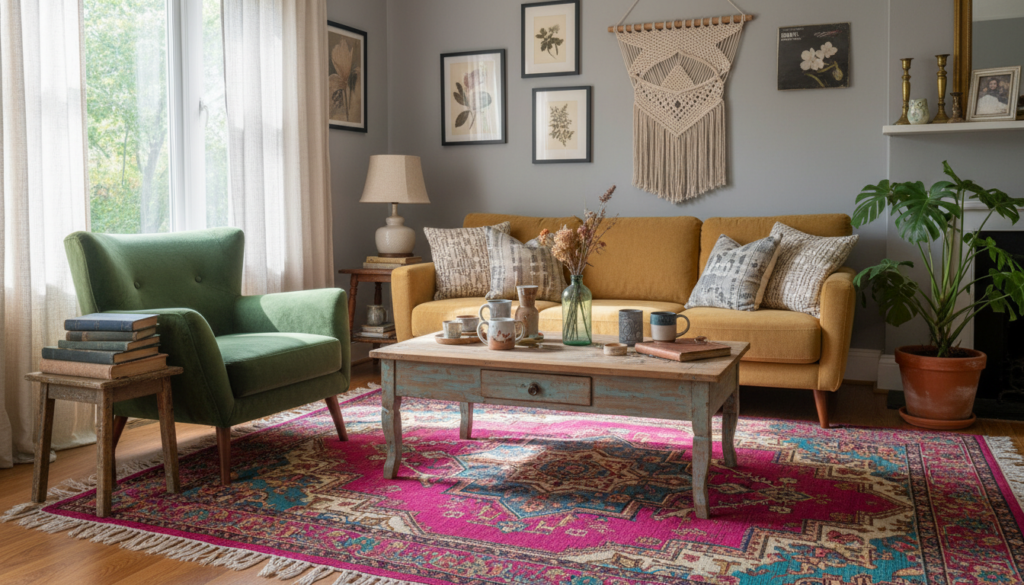
The Sourcing Hierarchy: Where to Look First
To furnish an apartment cheaply, you must follow a strict hierarchy of sourcing. Always exhaust the options in Tier 1 before moving to Tier 2, and so on. This ensures you never pay for something you could have received for free.
Tier 1: The Zero-Dollar Strategy (Community Sourcing)
Your first stop is the “gift economy.” In a world overflowing with consumer goods, people are constantly trying to offload furniture.
The “Buy Nothing” Project
Join your local “Buy Nothing” group on Facebook immediately. Unlike standard marketplaces, this is a gift economy based on hyper-local giving.
- The Strategy: Introduce yourself as a neighbor moving into an empty apartment. Be polite and patient. Post an “ISO” (In Search Of) request for specific items like a dining table or lamps. You will be shocked at the quality of items neighbors are willing to give away simply to reclaim space in their garages.
Curbside Scouting and “Street Picking”
This is the most primal form of frugal gathering, but it requires strategy to avoid taking home trash.
- The Timing: The best time to scout is the last two days of the month, specifically in neighborhoods with high rental turnover or near universities during semester breaks.
- The Inspection: purely visual checks are insufficient. Shake the item. Look for makers’ marks. Never take upholstered items from the curb (more on this in the hygiene section). Stick to hard surfaces: wood, metal, and glass.
Family and Friends
Let your personal network know you are looking. Older relatives often have basements full of “brown furniture”—sturdy, solid wood pieces from the mid-20th century that are currently out of fashion but incredibly durable. They may be thrilled to see it go to a good home.
Tier 2: The Treasure Hunt (Secondhand Markets)
If you cannot find it for free, buy it used. This is where your dollar stretches the furthest.
Facebook Marketplace & Craigslist
This is the engine of the modern frugal economy. However, finding the gold requires manipulating the search algorithm.
- Keyword Hacking: Don’t just search for “couch.” Search for the life events that force a sale. Use terms like: “Moving sale,” “Must go,” “Remodeling,” “Divorce sale” (sad, but effective), or “Emptying storage.”
- The Misspelling Trick: Sellers who are careless with spelling often price things lower and get fewer hits. Search for “Chester drawers” instead of “Chest of drawers,” or “Dinning table” instead of “Dining.”
- Negotiation: Cash is king. If an item is listed for $50, offer $40 and say, “I can pick it up within the hour.” Reliability is worth money to a seller who wants the item gone.
Estate Sales
Estate sales are superior to garage sales because they involve liquidating an entire household.
- The “Saturday Afternoon” Strategy: Estate sales often run Friday through Sunday. Friday is for collectors paying top dollar. Sunday is for clearance. If you go Saturday afternoon or Sunday morning, companies are often desperate to clear the house. You can often bundle items (e.g., “I’ll take this lamp, that rug, and the side table for $XX”).
Thrift Stores and Consignment Shops
- Location Matters: Visit thrift stores in affluent neighborhoods. The donations there are often higher quality brands or barely used items.
- Material ID: Learn to identify solid wood. Look for dovetail joints in drawers (interlocking wood teeth) rather than staples and glue. If you see a repeating grain pattern on the end of a board that doesn’t match the top, it’s veneer or laminate.
Tier 3: Strategic New Purchases (Retail Hacks)
Sometimes, you need a specific item immediately, or you need something brand new (like bedding).
IKEA “As-Is” Section
Before entering the main showroom, go to the “As-Is” section near the checkout. This is where returns and slightly damaged floor models live. You can often find fully assembled furniture for 40-60% off.
- Pro Tip: Look for “flat pack” boxes in this section. These are often items where the packaging was damaged, but the product is pristine.
Inventory Liquidators and Open-Box
Websites like Wayfair and Amazon have “Open Box” or “Warehouse Deals” sections. These are returns that cannot be sold as new. The discounts are significant, and the defects are often cosmetic or non-existent (simply a regretted purchase).
The Spend vs. Save Matrix
Smart frugality is about prioritization. You should not be cheap about everything. Use this matrix to decide where to allocate your limited budget.
Where to Invest (Buy New or High-Quality Used)
These items impact your health, hygiene, and ability to work.
- The Mattress: We spend a third of our lives sleeping. A bad mattress leads to back pain and poor productivity. Do not buy a used mattress unless it is from a trusted friend or family member. Look for “mattress in a box” brands that offer 100-night trials, or check Costco for high-value options.
- The Desk Chair: If you work from home, ergonomics are vital. Cheap chairs will cost you more in chiropractic bills later. Look for high-end office liquidators who sell used Herman Miller or Steelcase chairs for a fraction of the retail price.
- Cookware: You don’t need a 12-piece set. You need one high-quality cast iron skillet (often found cheap at thrift stores and easily restored) and one good chef’s knife.
Where to Go Cheap (Buy Used/Scavenge)
These items are structural and can be easily cleaned or modified.
- Hard Surfaces: Coffee tables, dining tables, bookshelves, and nightstands. Wood and metal can be sanded, painted, or polished.
- Lighting: Lamps are incredibly cheap at thrift stores. You can update the look instantly by buying a new shade from a discount store like Ross or TJ Maxx.
- Décor: Never pay full price for wall art, vases, or mirrors. These are abundant in the secondhand market.
The Golden Rule of Risk Management
Bed Bugs. The nemesis of the frugal.
Never bring a used sofa, mattress, or upholstered chair into your home without a rigorous inspection. Check the seams, zippers, and crevices for tiny black spots (fecal matter) or rust-colored stains. If you have any doubt, walk away. It is better to sit on the floor for a month than to pay thousands for extermination.

Transformation: Making Cheap Finds Look High-End
The difference between a “college dorm look” and a sophisticated apartment often comes down to DIY upgrades. You don’t need to be a carpenter to upcycle.
The Power of “The Sand and Stain”
Many “ugly” pieces of furniture are actually beautiful wood hidden under layers of cheap, orange-tinted varnish.
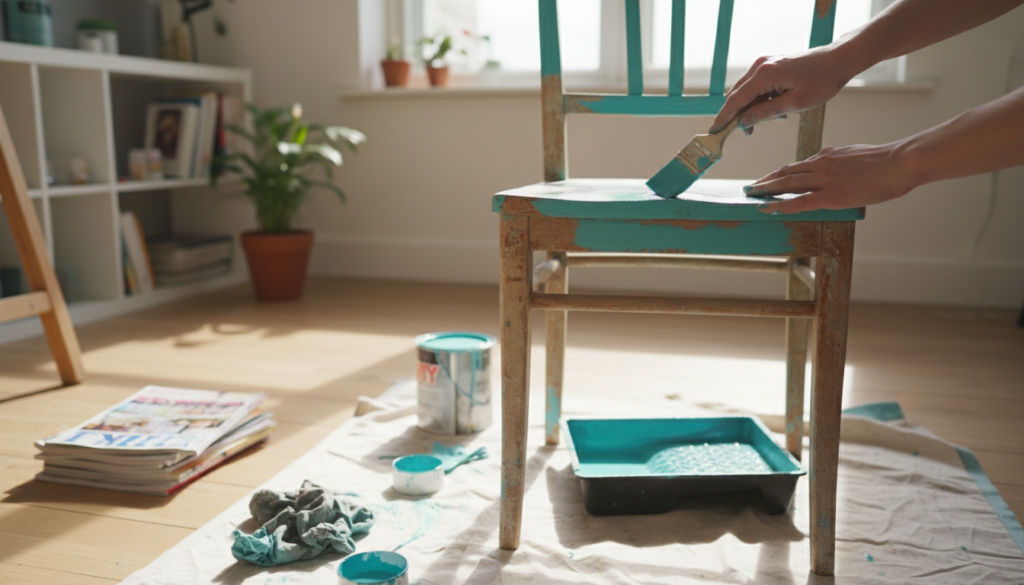
- The Fix: Buy an electric orbital sander (a $40 investment that pays for itself). Sand down the old finish on a thrifted table to reveal the raw wood. Seal it with a clear, matte poly-crylic or a natural Danish oil. The result is a modern, organic look that would cost hundreds at a retailer.
Hardware Hacks
Standard knobs and pulls on cheap dressers are often plastic or dated brass.
- The Fix: Swap them out. You can buy modern matte black or brushed gold hardware in bulk online. Changing the handles on a generic IKEA dresser or a thrifted cabinet instantly elevates the visual appeal and makes the piece look custom.
Textile Magic
If you find a sofa with a great shape (good “bones”) but an ugly pattern or slight wear:
- The Fix: Do not pay for professional reupholstery, which is expensive. Instead, use heavy canvas drop cloths (washed to soften them) as makeshift slipcovers, or buy stretch-fit covers. Use high-quality throw pillows and textured blankets to distract the eye from the underlying furniture fabric.
Multi-Functional Planning for Small Spaces
Frugal living often coincides with smaller living spaces. Every square foot has a rental cost attached to it. Ensure your furniture earns its keep.
The “Work Twice” Rule
Every major piece of furniture should serve at least two purposes.
- Storage Ottomans: Footrest, extra seating, and storage for blankets/electronics.
- Drop-Leaf Tables: A console table against the wall that transforms into a dining table for four.
- Sofa Beds: Essential if you plan to have guests but can’t afford a two-bedroom apartment.
Visual Space vs. Physical Space
To make a small apartment feel larger without spending money on renovations, choose furniture with “legs.” Sofas and armchairs that sit flush on the floor block light and make the room feel heavy. Furniture raised on legs allows light to pass underneath, increasing the sense of visual openness. Glass or acrylic coffee tables also disappear visually, reducing clutter.
Advanced Strategy: The “Inventory Liquidator” Mindset
For the advanced frugal enthusiast, consider yourself a temporary custodian of your furniture.
The Resale Value Strategy
When buying a used item, ask yourself: “If I move in two years, can I sell this for what I paid?”
- Good Buy: A vintage mid-century modern dresser bought for $100. You can likely resell it for $150.
- Bad Buy: A brand new particle-board desk from a big-box store for $100. In two years, it will be worth $0.
By focusing on solid wood, vintage items, and name brands found secondhand, you are essentially “renting” furniture for free (or even making a profit) when you eventually sell it.
Common Mistakes to Avoid
Even the most savvy savers stumble. Avoid these pitfalls:
- The “Empty Room Panic”: Buying everything in the first week usually leads to clutter and regret. A home takes time to curate.
- Ignoring Measurement: There is nothing more expensive than a cheap couch that doesn’t fit through your door. Measure your hallways, elevator, and door frames, not just the room itself.
- Over-DIYing: Be realistic about your skills and time. Don’t buy a project piece that requires complex structural repair if you don’t own clamps and wood glue. A “fixer-upper” that sits broken in the corner for a year is just expensive trash.
Implementation Checklist
Week 1:
- [ ] Clean the apartment thoroughly.
- [ ] Measure all rooms and doorways.
- [ ] Acquire a mattress (New/High-quality).
- [ ] Join local “Buy Nothing” groups and introduce yourself.
- [ ] Scout thrift stores for basic kitchenware (plates, cups, skillet).
Month 1:
- [ ] Set up alerts on Facebook Marketplace for key items (Sofa, Table).
- [ ] Visit estate sales on weekends for smaller furniture.
- [ ] Identify one piece to “upcycle” (paint or stain).
Month 3:
- [ ] Assess lighting needs (lamps).
- [ ] Add soft décor (rugs, curtains) found on sale or secondhand.
- [ ] Evaluate what is still missing—do you really need it?
Comprehensive FAQ
Q: Is it safe to buy used upholstered furniture?
A: It carries risk. Hard surfaces are always safer. If you buy upholstery, inspect it with a flashlight for bed bugs. Avoid buying from storage units or curbside. Buying from a clean, private home via Marketplace is generally safer than a generic thrift store.
Q: How do I transport furniture if I don’t own a truck?
A: Factor transportation into your budget. You can rent a pickup truck from Home Depot or U-Haul for roughly $20 for the first 75 minutes. Alternatively, apps like Lugg or TaskRabbit connect you with someone with a truck, though this costs more. The cheapest way? A friend with a truck, paid in pizza and gas.
Q: What is the best time of year to find cheap furniture?
A: Late May and June (college move-outs) and late August (lease turnover). Also, January is excellent for thrift stores as people donate items after receiving new Christmas gifts.
Q: How can I make unmatched furniture look cohesive?
A: Use a unifying element. If you have mismatched wood tables, try to match the “warmth” of the wood tone, or paint them all the same color. Rugs are excellent for tying together disparate furniture styles into a single zone.
Conclusion
Furnishing an apartment on the cheap is an exercise in patience and vision. It is a rejection of the idea that a beautiful home requires a credit card balance. By sourcing from your community, choosing quality used materials over cheap new ones, and willing to put in a little work, you create a space that has soul.
A room filled with catalog furniture feels like a showroom; a room filled with curated, hunted, and restored pieces feels like a home. Enjoy the process of the hunt, and take pride in every dollar saved.