
The aroma of freshly cut wood, the satisfying click of knitting needles, the vibrant splash of paint on a canvas – these are the moments that ignite our creative souls. And for many of us, the desire to share that passion, to connect with fellow makers, and even to build something truly meaningful becomes irresistible. That’s where a craft blog steps in.
I’ve watched countless passionate crafters transform their hobbies into thriving online communities, and frankly, I believe you can too. It’s more than just a place to post pretty pictures; it’s a platform to teach, inspire, and yes, even earn an income doing what you love. If you’ve ever felt that itch, that whisper urging you to share your unique creative voice, then this guide is for you. We’ll cut through the noise, skip the fluff, and get straight to the actionable steps. My goal is to equip you with the insights into starting your own craft blog, built on solid foundations, ready for growth. Believe me, the journey is rewarding. In fact, if you want to learn from my experience starting a craft blog, I highly recommend digging into some of the hard-won lessons I’ve gathered.
Section 1: Laying the Foundation – Your Crafting Niche and Vision
Starting any venture without a clear vision is like beginning a complicated craft project without a pattern. You might end up with something, but will it be what you truly intended? Probably not.
Defining Your Crafting Niche
What exactly is a niche? It’s your specific corner of the crafting world. Your speciality. Think of it as your unique flavor in a crowded craft fair. Why is it so crucial for success? Because trying to appeal to everyone means you’ll likely appeal to no one. I’ve seen this mistake derail more aspiring bloggers than I can count.
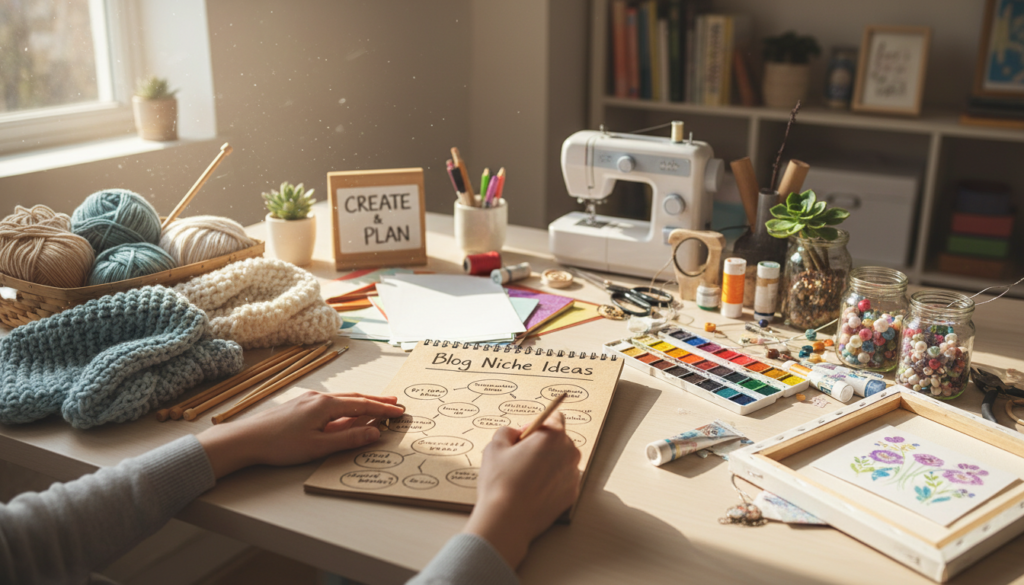
So, let’s brainstorm a few ideas. Are you obsessed with detailed cross-stitch patterns? Perhaps you’re a wizard with your Cricut machine, designing everything from vinyl decals to intricate paper crafts. Maybe DIY home decor is your jam, transforming thrift store finds into treasures. Or maybe it’s the cozy world of knitting, teaching beginner techniques for scarves and blankets. Your niche isn’t just what you craft; it’s how you approach it, who you’re speaking to. This is where your unique selling proposition (USP) truly shines. What makes your craft blog different? Is it your quirky sense of humor, your minimalist aesthetic, or your deep dives into sustainable crafting? Figure that out, and you’re halfway home.
Naming Your Craft Blog
Choosing a name feels like a huge decision, right? It absolutely is. This name will become your brand, your identity. My top tip? Aim for something memorable and brandable. Something that rolls off the tongue.
I always suggest incorporating keywords and your niche into the name if it feels natural. “Knitting Nook,” “The Cricut Corner,” “Sustainable Stitcher.” These names tell potential readers exactly what they’ll find. Don’t forget the practical side: once you have a few contenders, immediately check for availability. That means checking the domain name (is the .com available?) and social media handles. Consistency across platforms is key for building recognition.
Crafting Your Brand Identity
Beyond the name, your brand identity encompasses the whole vibe of your craft blog. It’s the visual style, the personality. What colors speak to you? What fonts convey your crafting aesthetic – elegant script for fine art, playful sans-serif for kid-friendly crafts? A well-designed logo isn’t just pretty; it’s a silent communicator of your brand.
But it’s not just about aesthetics. It’s about understanding your target audience. Who are you talking to? Beginners, advanced crafters, parents, young adults? Tailor your visuals, your language, and your entire approach to resonate with them. They’re your community, after all.
Section 2: Technical Setup – Getting Your Craft Blog Online
Okay, time to get a little technical. I know, I know. This part often feels daunting, but trust me, it’s far more straightforward than it seems. Think of it as assembling your craft table before you start a project. Essential.
Choosing a Blogging Platform
This is where you decide where your craft blog will actually live on the internet. You’ve got options. Popular choices include WordPress.org, Wix, Blogger, and Squarespace. Each has its pros and cons, but here’s my honest take.
You’ll encounter both self-hosted platforms (like WordPress.org) and free platforms (like Blogger or a basic Wix site). While free sounds tempting, I’ve found that they often come with significant limitations on customization, monetization, and ultimately, ownership. For serious craft bloggers, I consistently recommend WordPress.org. Why? Because it offers unparalleled flexibility, scalability, and control. It’s powerful, professional, and lets you grow without hitting frustrating roadblocks. Yes, there’s a small learning curve, but the investment in time pays off exponentially.
Selecting Web Hosting and Domain Registration
Imagine your blog is a house. Your domain name is the address (mycraftyblog.com), and web hosting is the land your house sits on. You absolutely need both. Web hosting is crucial because it’s where all your blog’s files, images, and content are stored, making them accessible to anyone on the internet. Without good hosting, your site will be slow, unreliable, or simply won’t exist.
I’ve worked with many providers, and for a new craft blog, I often point people towards reliable options like Bluehost or Hostinger. They offer affordable plans, good support, and generally make the setup process painless. Many hosting providers will also let you register your chosen domain name directly through them, simplifying things further. It’s usually a quick, annual fee to secure your unique online address.
Designing Your Craft Blog
Now for the fun part – making it look pretty! This is where your crafting sensibility truly shines. You’ll choose a theme or template that reflects your unique craft style. Are you modern and minimalist? Rustic and charming? Bright and playful? There’s a theme for every aesthetic.
Customizing your blog’s appearance means playing with layout, colors, and typography until it feels just right. Don’t forget the essential pages: an About Me page (where you introduce yourself and your passion!), a Contact page, and a Privacy Policy (it’s a legal necessity). If you’ve chosen WordPress, you’ll also install necessary plugins. These are small software add-ons that add functionality, like a contact form, an SEO tool, or a gallery for your beautiful craft photos. They’re invaluable.
Section 3: Creating Engaging Craft Content
This is the heart of your craft blog. Without fantastic content, all that technical setup is just a beautifully empty house. Your words and images are what draw people in and keep them coming back.
Planning Your Content Strategy
Don’t just randomly post. Have a plan. I always tell clients to brainstorm an initial list of blog post ideas. Think big: tutorials on specific projects, showcases of your finished work, honest reviews of craft supplies, even virtual tours of your craft room. People love seeing behind the scenes.
Next, create a content calendar. This doesn’t have to be rigid, but it provides structure. Aim for consistency. Weekly? Bi-weekly? Whatever you choose, stick to it. Finally, consider evergreen versus trending topics. Evergreen content (like “Beginner’s Guide to Knitting”) stays relevant for years. Trending topics (like “Halloween Craft Ideas 2024”) capitalize on current interest. A good mix is often best.
Writing Your First Blog Post
Your first post is always the hardest. Just start! If it’s a craft tutorial, structure it compellingly. Break it down into clear, step-by-step instructions. Assume your reader knows nothing. This is critical.
The importance of high-quality visuals cannot be overstated. Stunning photos and clear videos are absolutely essential for a craft blog. Show your process. Show the finished product. Make people say, “I want to make that!” Crafting engaging headlines and introductions is also vital. Hook them immediately. Give them a reason to keep reading. And always, always include a call to action. Ask for comments. Encourage them to share their own projects. Build that interaction.
Mastering On-Page SEO for Crafters
Ah, SEO. It sounds intimidating, but it’s simply optimizing your content so people can find it on search engines like Google. For crafters, this means keyword research for craft-related terms. What are people searching for? “How to knit a hat,” “Cricut joy projects,” “DIY macrame plant hanger.” Use tools to find these terms.
Then, optimize your titles, meta descriptions (the small summary under the title in search results), and headings with these keywords. But don’t stuff them in! Make it natural. Image optimization is another big one: use descriptive alt text for your photos. This helps search engines understand what your images are about and improves accessibility. And finally, linking. Internal links connect your own blog posts, while external links point to other reputable sites. This shows Google you’re a valuable resource.
Section 4: Growing Your Audience and Community
You’ve built your beautiful craft blog, filled it with incredible content. Now what? It’s time to invite people over!

Promoting Your Craft Blog
Promotion is non-negotiable. Leverage social media strategically. Pinterest is a goldmine for crafters. Instagram is visual heaven. TikTok offers short, engaging tutorials. Don’t forget Facebook Groups where you can genuinely connect with niche communities (but always respect group rules!).
Email marketing is another powerful tool. Start building a subscriber list from day one. Offer a free pattern or guide in exchange for an email address. This direct line of communication is invaluable. Consider guest posting on other craft blogs or collaborating with fellow crafters. It’s a fantastic way to reach new audiences. And of course, participate in online craft communities. Be helpful, be genuine. The connections you make can be incredibly fruitful.
Building a Community Around Your Crafts
Your readers aren’t just statistics; they’re people. They’re your tribe. Engage with comments and feedback. Respond thoughtfully. Show you care. Run contests or giveaways – they generate excitement and engagement.
My belief is that the most successful craft blogs foster a truly supportive and interactive space. It’s not just about you sharing; it’s about creating a dialogue. Encourage readers to share their versions of your projects. Ask for their opinions. When you build a community, you build loyalty.
Section 5: Monetizing Your Craft Blog
Let’s talk about the money. While passion fuels a craft blog, there’s no shame in wanting to make money from your hard work. In fact, it’s a smart move to sustain your creative output.
Common Monetization Methods
The avenues for monetization are diverse. Affiliate marketing is hugely popular: you promote craft supplies, tools, or books you genuinely love, and earn a commission when someone buys through your unique link. Selling your own handmade products or digital patterns directly from your blog is a natural fit for many crafters.
Display advertising, through networks like AdSense, can generate passive income once your traffic grows. Sponsored content and brand partnerships allow you to work directly with companies, creating unique posts or projects featuring their products in exchange for payment. And for those with specialized skills, creating and selling paid tutorials or online courses can be incredibly lucrative. You’re packaging your expertise!
Legal Considerations
With money comes responsibility. Two main legal points I urge you to consider: disclosures for affiliate links and sponsored content. Be transparent! Your audience trusts you; tell them when you’re earning a commission or being paid for a post. It’s often legally required.
Also, be mindful of copyright for patterns and designs. Respect other creators’ work, and ensure your own original patterns are protected if that’s something you plan to share or sell. A little legal housekeeping upfront can save a lot of headaches later.
Conclusion: Your Crafting Blog Journey Begins!
Starting a craft blog is a journey, not a destination. We’ve covered everything from finding your unique niche and setting up your online home to crafting engaging content, building your community, and even figuring out how to monetize your passion.
The path won’t always be smooth. There will be frustrating tech issues, moments of self-doubt, and times you feel like no one is reading. But I promise you this: the rewarding journey of craft blogging – the connections you make, the skills you develop, and the creative life you build – is absolutely worth it. So, take that first step. Your creative empire awaits.