
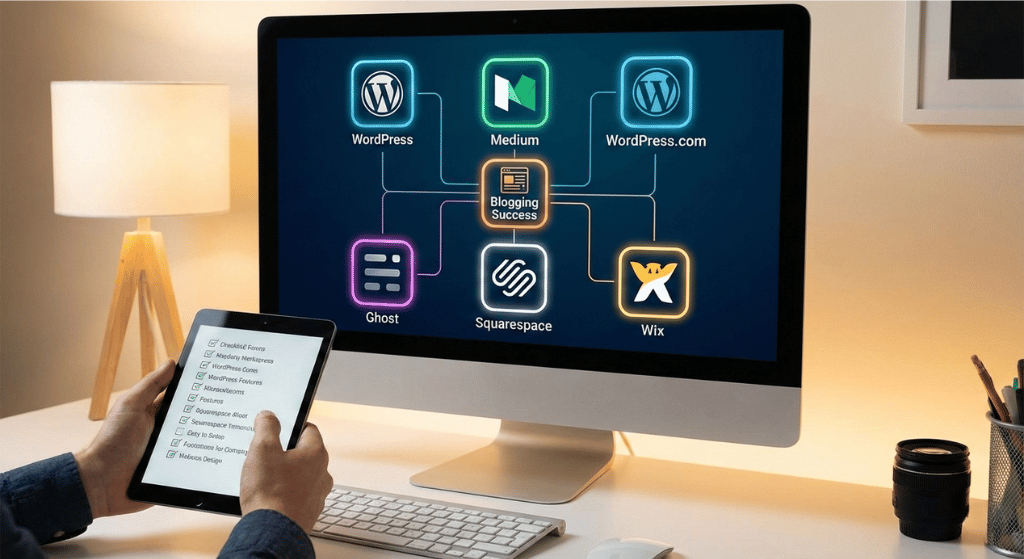
Launching a blog can be an exciting yet daunting first step into the online world. With so many great blogging platforms to choose from, how do you know which one is the right fit for you?
This comprehensive guide will compare the top blogging platforms across crucial factors like ease of use, customization options, built-in SEO tools, monetization capabilities, and more. Our goal is to help you make an informed decision based on your specific blogging needs and goals.
Key Factors to Consider When Choosing a Blogging Platform
With the wide array of blogging platform options available today, it’s essential to understand the key factors that separate the contenders:
- Ease of setup and use: How quick and intuitive is it to setup your blog and start publishing content? Ideally, you want a platform that lets you start blogging immediately without technical hurdles.
- Writing interface and Markdown support: A clean, distraction-free writing interface with Markdown for text formatting makes composing blog posts simple.
- Design capabilities: Customizing your blog’s design with themes/templates, fonts, colors, and layouts allows you to create an engaging brand.
- Page load speed: Fast page loads enhance visitor experience and improve your blog’s search engine rankings.
- SEO capabilities: Built-in SEO tools like metadata optimization and XML sitemaps improve discoverability and traffic.
- Support for custom domains: Using your own domain instead of the platform’s subdomains builds credibility and brand recognition.
- Support for custom code: Adding custom HTML/CSS/JavaScript allows advanced customizations aligned with your vision.
- Value for money: Paid plans should offer robust features and capabilities aligned with their pricing.
- Customer support and community: Whether through documentation, forums or chat support, having assistance when needed is crucial.
We’ll now compare the most popular blogging platforms across these key aspects to reveal the ideal choice based on your blogging goals and technical skill level.
Top Blogging Platforms for Beginners
When just starting out, an easy-to-use blogging platform with powerful free options offers immense value. These solutions check those boxes beautifully.
1. WordPress
Overview: Founded in 2003, WordPress powers over 60 million websites today, making it the world’s most popular blogging platform and content management system. Its open-source software, backed by a strong community of developers and users, makes WordPress extremely customizable to match diverse needs.
Benefits:
- Intuitive Dashboard simplifies site management
- 100,000+ free themes and plugins facilitate customization
- SEO optimization capabilities out of the box
- Moderately easy to learn and use for non-developers
- Scales from basic blogs to large online stores
- Strong community support available via forums and documentation
Potential Drawbacks:
- Hosting, updates and backups require moderate technical skills
- Steep learning curve for extensive customization
- Security risks if not updated diligently
Verdict: With its immense capabilities and customizations unlocked via thousands of plugins and themes, WordPress offers incredible value at zero cost. While beginners may find its backend slightly overwhelming initially, its ecosystem of Learning resources helps bridge the gap.
2. Medium
Overview: While WordPress dominates the self-hosted blogging world, Medium has carved out its own unique space since its 2012 launch by Twitter co-founder Evan Williams. Think of it as the sleek, minimalist coffee shop of the blogging world, where writers and readers gather for thoughtful discourse.
Benefits:
- You’ll love the distraction-free writing interface that lets your words take center stage
- Built-in audience access puts your content in front of eager readers from day one
- The Partner Program lets you monetize your writing based on member engagement
- Robust analytics help you understand exactly how readers interact with your stories
- Social features like claps and responses foster genuine reader connections
- Zero technical maintenance means you can focus purely on writing
Potential Drawbacks:
- Limited customization options might feel restrictive if you’re looking to build a unique brand
- The platform owns your content distribution, which means playing by their rules
- Monetization requires building a substantial following first
- You’re building your audience on rented land – Medium controls the relationship
- The algorithmic feed can make consistent reader engagement challenging
Verdict: Medium shines brightest for writers who want to focus on crafting great content without getting bogged down in technical details. While you won’t get WordPress-level customization, you’ll gain access to a ready-made audience and a beautiful, professional-looking blog from day one. It’s perfect for thought leaders, professional writers, and anyone looking to build authority through long-form content.
3. WordPress.com
Overview: As the fully-hosted version of self-installed WordPress, WordPress.com handles hosting, updates and security on users’ behalf. The platform offers free blogging capabilities while monetizing through advanced features and custom design offerings.
Benefits:
- Instant setup and one-click blog launch
- Easy-to-use interface perfect for beginners
- Free native apps for blogging on-the-go
- Scales to add ecommerce store capabilities
- Relatively more secure with automatic updates
Potential Drawbacks:
- Limits on design customizations on free plans
- Required use of WordPress.com subdomain
- Lock-in effects make migration to self-hosted tricky
Verdict: WordPress.com makes blogging accessible for beginners with its simplified backend. However, users seeking significant design control and custom domains may outgrow it quickly.
4. Ghost
Overview: Launched in 2013 as a Kickstarter project, Ghost focuses purely on creating the best platform for building and monetizing online publications. Backed by a non-profit foundation, Ghost continues to refine its publishing interface to empower creators.
Benefits:
- Intuitive editing with distraction-free writing interface
- Creators retain ownership rights over content
- Integrated membership and subscription capabilities
- Mobile app simplifies publishing on-the-go
- Detailed analytics for readership insights
Potential Drawbacks:
- Limited free plan offering basic features
- Less customizable than self-hosted WordPress
- Primarily suited for blogs rather than multipurpose sites
Verdict: Ghost shines with its refined writing and reading experience tailored for modern online publications. For creators seeking complete ownership over content and audience relationships, Ghost is a superb choice.
5. Squarespace
Overview: Founded in 2004, Squarespace empowers creators to build beautiful, professional websites with no coding required through its user-friendly editor. With elegant templates tailored for blogs, stores, portfolios and more, Squarespace aims to make web creation accessible.
Benefits:
- Gorgeous templates to showcase photography/visual content
- Built-in ecommerce capabilities
- Easy implementation of animations/overlays
- Accepts PayPal alongside credit card payments
- Free custom domains available on all plans
Potential Drawbacks:
- Limited blogging functionality compared to dedicated platforms
- High monthly costs for advanced features and customizations
Verdict: For visually compelling websites beyond basic blogs, Squarespace provides a robust solution. However, cheaper alternatives like Weebly match it on core features.
6. Wix
Overview: As a leading freemium website builder since 2006, Wix empowers creators to craft stunning sites through intuitive drag-and-drop tools and AI-driven applications. With over 200 million registered users, Wix aims to democratize web creation for businesses and individuals alike.
Benefits:
- Extensive design capabilities for unique sites
- SEO Wiz assistant for optimized web pages
- Hundreds of templates suited for diverse verticals
- Wix ADI feature builds sites automatically
- Native mobile app for managing sites on-the-go
Potential Drawbacks:
- Annoying ads on free plans
- Builder-focused rather than blogging-focused
- Ecommerce transaction fees are high at 5%
Verdict: Wix shines when building multipurpose sites blending blogs, stores and booking systems. For pure-play blogging at scale however, rivals like WordPress provide cheaper growth.
Key Takeaways When Comparing Blogging Platforms
Here are our top recommendations based on common blogger personas and use cases:
- For hobby bloggers seeking a free, easy-to-use platform — Choose WordPress.com
- For pro bloggers wanting customization capabilities — Choose self-hosted WordPress
- For photographers and artists showcasing visual content — Choose Squarespace
- For ecommerce store owners selling products — Choose Shopify or Wix eCommerce plans
- For writers and publications monetizing content — Choose Ghost
While there are no outright “best” or “worst” blogging platforms, aligning your choice with your goals and skill level is key for long-term success. Applying the criteria and comparisons highlighted here will steer you towards great options as you start your exciting blogging journey!